
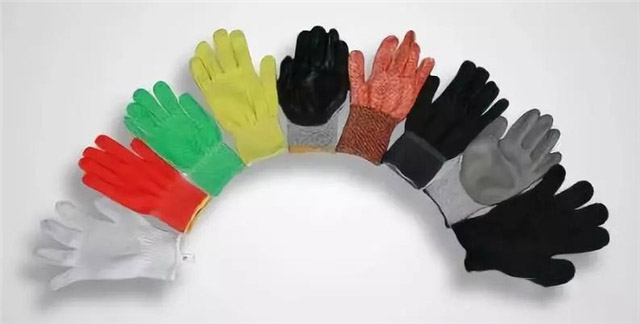
Catching a Blade Bare-Handed: A Glove That Stays Uncut
In an earlier episode of the program “Cheer for the Future,” the host demonstrated a “cut but unbroken” cut-resistant glove on stage, amazing the audience.

The cut-resistant glove shown on the program was made from ultra-high molecular weight polyethylene (UHMWPE) fiber. Among existing high-performance fibers, UHMWPE fiber has the strongest abrasion and flex resistance and tension fatigue performance, with outstanding impact resistance and cut-resistant toughness.

A single strand of UHMWPE fiber only one-quarter the thickness of a human hair is difficult to cut even with scissors, and the finished textile must be cut with special machinery.

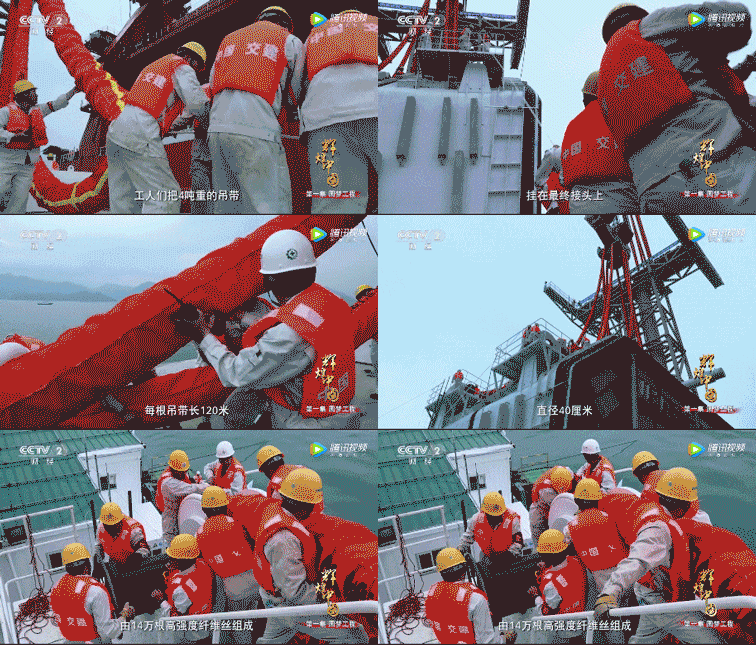
Hair-thin UHMWPE fiber is in fact not a single filament but a bundle of multifilament yarn made up of many finer fibers. A single sling used on the Hong Kong-Zhuhai-Macao Bridge is made up of more than 100,000 such strands.
140,000 High-Strength Fiber Strands Make One Sling
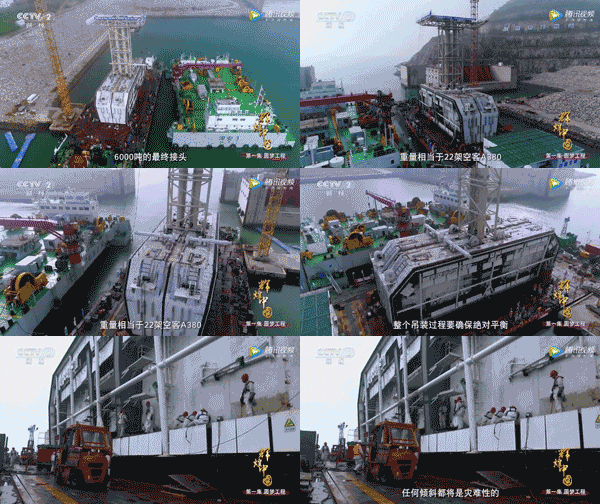
On 2 May 2017, the final joint of the immersed tunnel of the Hong Kong-Zhuhai-Macao Bridge island and tunnel project – a steel-concrete precast element weighing about 6,000 tons – was lowered and connected in the main shipping channel of Lingdingyang, marking the completion of the bridge’s main structure.
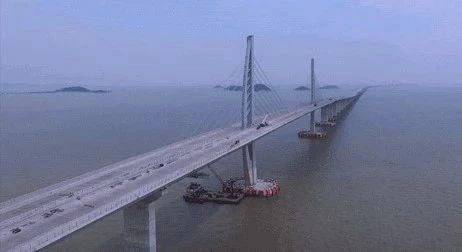
Few people know, however, that lifting a 6,000-ton giant at sea also relied on a crucial component: a sling made of 140,000 high-strength fiber strands, which not only had to bear the weight of an immersed tunnel equivalent to 22 Airbus A380s but also had to maintain absolute balance throughout the lifting process.
The strands that lifted the bridge’s precast elements are made of UHMWPE fiber, only 0.5 mm in diameter – as fine as a human hair – yet 20 times stronger than ordinary nylon rope. Small as it is, a single strand can carry 35 kg, enough to lift a small child.
Ultra-high molecular weight polyethylene (abbreviated as UHMWPE) fiber, along with carbon fiber and aramid, is known as one of the three major high-performance fibers. It currently has the highest specific strength and ballistic performance among industrially produced fiber materials, with a specific strength 15 times that of high-quality steel wire, 1.8 times that of carbon fiber and 1.6 times that of aramid, and it is the preferred material for making ballistic vests, ballistic helmets and protective armor. UHMWPE fiber offers excellent properties such as high strength and high modulus, impact resistance, abrasion resistance, chemical corrosion resistance, electrical insulation and light resistance; it has an extremely low elongation at break, high energy absorption, is soft and easy to bend, and has a density lower than that of water. Widely used in national defense and military industries as well as civilian industry, it is a strategic material for building a strong country and a strong military. Because it is light enough to float on water, cables made from UHMWPE fiber are far lighter than steel cables, which made the smooth lifting of the bridge possible.
Excellent Protective Material for National Defense and Military and Police Use
UHMWPE fiber is “as light as paper and as hard as steel,” and ballistic and blast helmets made from resin composites reinforced with the fiber have become a replacement for steel helmets and aramid-reinforced composite helmets.
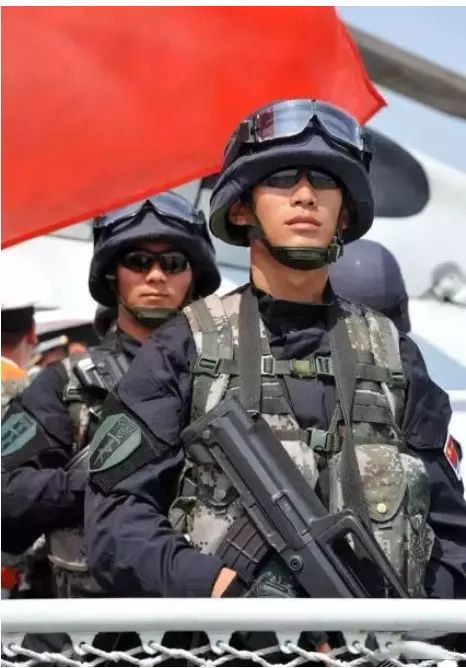
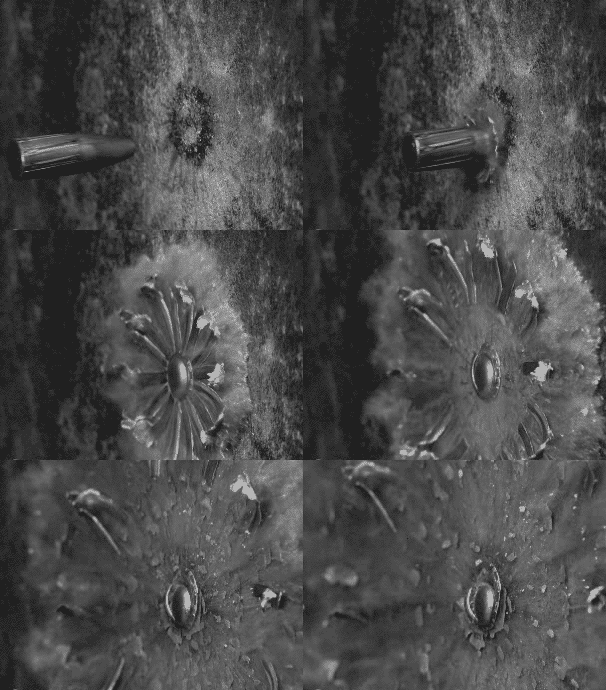
UHMWPE fiber is a soft material; its ballistic mechanism mainly involves the projectile stretching and shearing the fiber while the fiber spreads the impact energy to areas beyond the point of impact. The energy is absorbed and the fragment or bullet is wrapped inside the ballistic layer, so that a large amount of the projectile’s impact energy is absorbed and ballistic protection is provided.
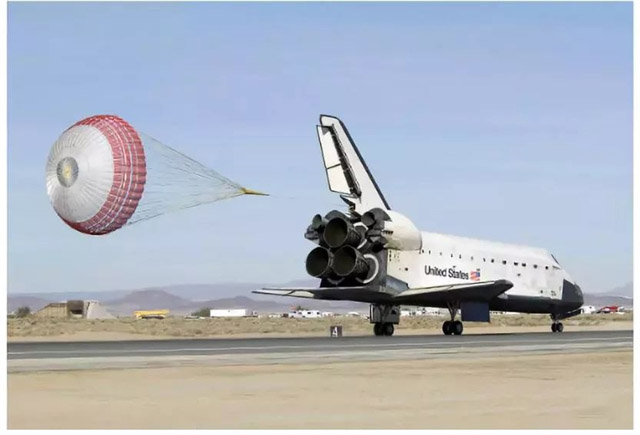
In aerospace engineering, because the fiber composite is lightweight, high-strength and impact-resistant, it can be applied to wingtip structures of various aircraft, spacecraft structures and buoy aircraft. The fiber can also be used for deceleration parachutes for space shuttle landings and for ropes that suspend heavy loads on aircraft, replacing traditional steel wire ropes and synthetic fiber ropes, and its development has been extremely rapid.
In industrial applications, the fiber and its composites can be used for pressure vessels, conveyor belts, filter materials and automotive bumper panels; in construction they can be used for walls and partition structures, and as a reinforcing cement composite they can improve the toughness of cement and enhance its impact resistance.
In sports products, helmets, skis, windsurfing boards, fishing rods, rackets and parts for bicycles, gliders and ultralight aircraft have already been made, with performance superior to traditional materials.
In clinical medicine, the fiber-reinforced composite is used in dental base materials, medical implants and plastic surgery sutures. It has good biocompatibility and durability, high stability and does not cause allergies, and it has entered clinical use. The fiber is also used in medical gloves and other medical applications.
Development Landscape for High-Performance Fibers
The production technology for high-performance UHMWPE fiber was long blockaded by Western countries, which imposed embargoes on other countries. As China’s national defense industry and national economy have developed, demand for high-performance fibers has grown steadily while international prices have kept rising, and domestic applications of high-performance fibers in defense and special fields remained constrained by foreign supply. Vigorously developing the high-performance fiber industry, breaking foreign blockades and monopolies, and further strengthening China’s military equipment capabilities and the industrial upgrading of the national economy therefore became a key focus for China’s chemical fiber industry in pursuing independent innovation and transformation. China began research and development on UHMWPE fiber in the 1980s and has now become the world’s third-largest producer of UHMWPE fiber.
NDRC: Three-Year Action Plan to Strengthen the Core Competitiveness of Manufacturing
By the end of the 13th Five-Year Plan period, special programs for the industrialization of key technologies will be organized and implemented in key areas such as rail transit equipment, high-end ships and marine engineering equipment, intelligent robots, smart cars, modern agricultural machinery, high-end medical devices and pharmaceuticals, new materials, intelligent manufacturing, and major technical equipment.
The new materials industry is an important foundation for national economic development. Accelerating the cultivation and development of the new materials industry is of great strategic significance for promoting industrial transformation and upgrading, safeguarding the implementation of major projects and enhancing the core competitiveness of manufacturing.
● Accelerate the industrialization of advanced key metal and non-metal materials
● Accelerate the industrialization of key technologies for advanced organic materials
● Raise the production and application level of advanced composite materials
To raise the production and application level of advanced composite materials, the plan specifically proposes prioritizing high-performance fibers and their applications, including high-performance carbon fiber, para-aramid, UHMWPE fiber, polyimide fiber and silicon carbide fiber, as well as bio-based chemical fibers and their applications, such as new solvent-method cellulose fiber, polylactic acid fiber, poly(trimethylene terephthalate) fiber and bio-based polyamide fiber.