
The armor worn by ancient warriors was made of metal, and early ballistic vests were also made from special steel; both were excessively heavy. In recent years, a soft and comfortable ballistic vest made of plastic has appeared, and this plastic is called ultra-high molecular weight polyethylene.
Ultra-high molecular weight polyethylene (UHMWPE) has the same structure as ordinary polyethylene, but its molecular weight is much higher than that of ordinary polyethylene: ordinary polyethylene has a molecular weight of 20,000 to 30,000, while ultra-high molecular weight polyethylene exceeds 2 million. It therefore has many excellent properties.
The characteristics of ultra-high molecular weight polyethylene begin with wear resistance, which ranks first among plastics and is several times better than that of carbon steel or brass. Its impact strength is the highest among existing plastics and remains considerable even at −70 °C. It also has good self-lubricating properties comparable to those of PTFE and shows little wear when paired with steel or copper. In addition, its water absorption rate is the lowest among engineering plastics, so products do not change dimensions through water absorption in humid environments, and their precision and wear resistance are unaffected. As the above shows, many of its properties exceed those of steel, and within a certain range it can serve to “replace steel with plastic”.
In 1953, Germany used special organometallic compounds as catalysts to polymerize ethylene at low temperature and low pressure to obtain high-density polyethylene. By 1957, both Germany and the United States could produce ultra-high molecular weight polyethylene with a molecular weight above 1 million using low-pressure methods. Today, the ultra-high molecular weight polyethylene produced in Japan and Germany has long exceeded a molecular weight of 6 million, and Germany has now produced ultra-high molecular weight polyethylene with a molecular weight as high as 10 million; it is a new type of engineering plastic.
Because ultra-high molecular weight polyethylene has so many excellent properties, it has been widely used in textiles, papermaking, food, chemical packaging, agriculture, construction, medical care, sports and military fields, with textile machinery being the earliest application. In papermaking it is used for suction box cover plates and doctor blades of paper machines; in medical care and culture and sports it is used to make the acetabular cup of artificial hip joints, as well as sleds and roller-skating rink flooring; in military applications it is used to make ballistic vests and target plate covers.
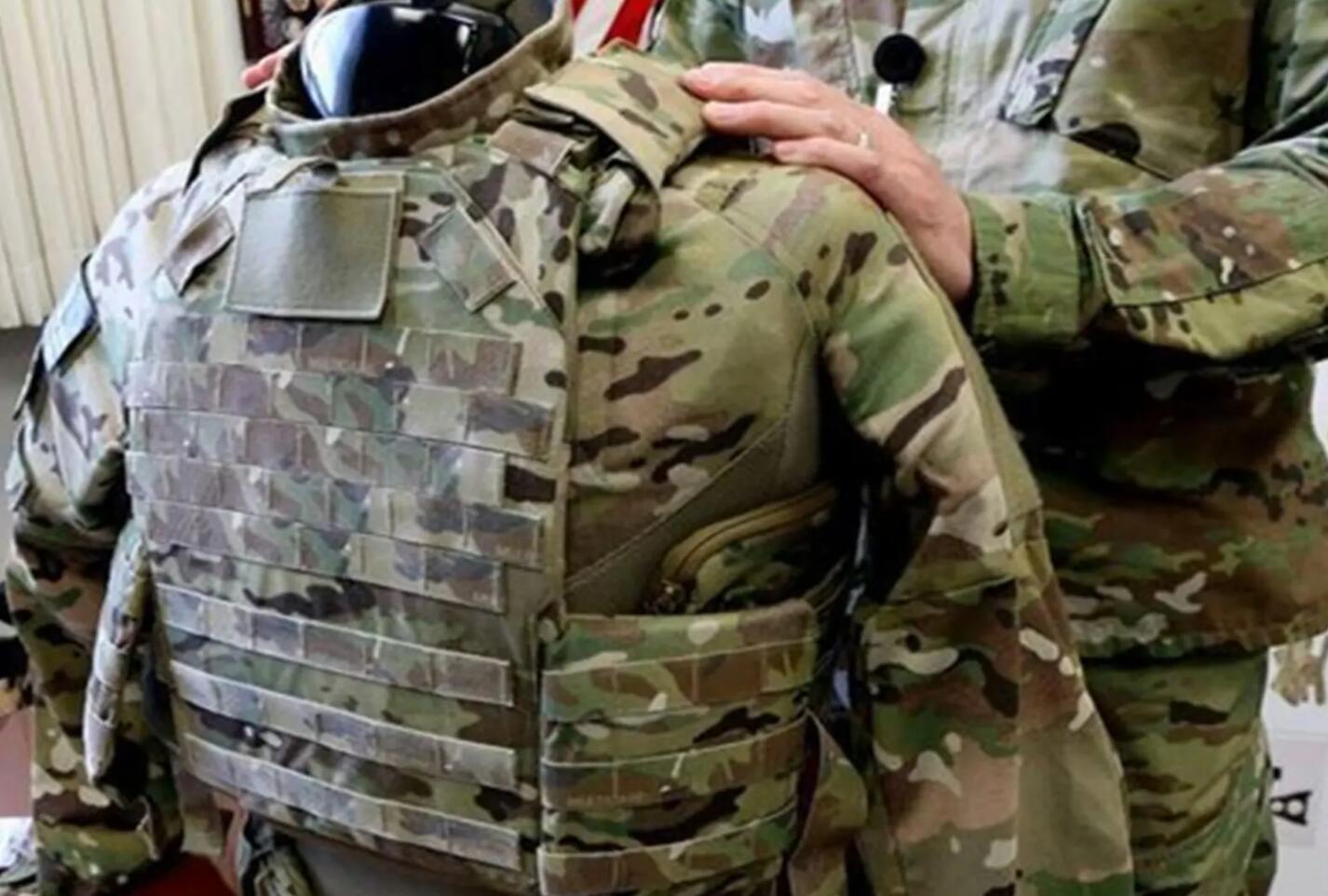
A ballistic vest is required to effectively protect against bullets fired from handguns and rifles. Its basic mechanism is to completely dissipate the kinetic energy of a bullet through the tensile failure of the vest’s yarns. Ballistic vests were developed after the Second World War, when the United States first used nylon and hard metal plates to develop ballistic breastplates and ballistic aprons. In the 1960s, with the development of the synthetic fiber industry, ballistic helmets and ballistic vests made from aramid fabric replaced those made of metal. Thereafter, a material with even better performance was used for ballistic equipment — ultra-high molecular weight polyethylene — opening a new era in the history of ballistic protection.
China’s armed police force also began using ballistic helmets made of ultra-high molecular weight polyethylene in 1998. Thanks to the promotion and application of UHMWPE fiber, heavy metal ballistic vests have been replaced by light, soft non-metallic ballistic vests, bringing the overall performance of ballistic vests to a new level.